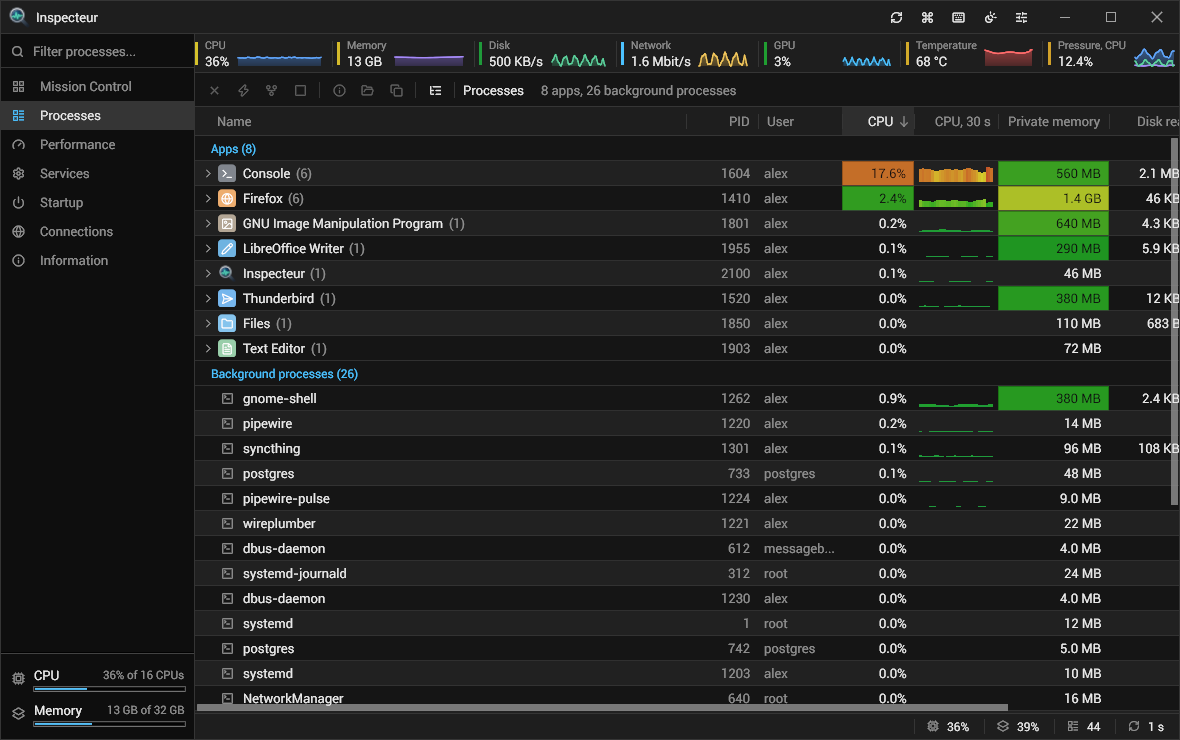
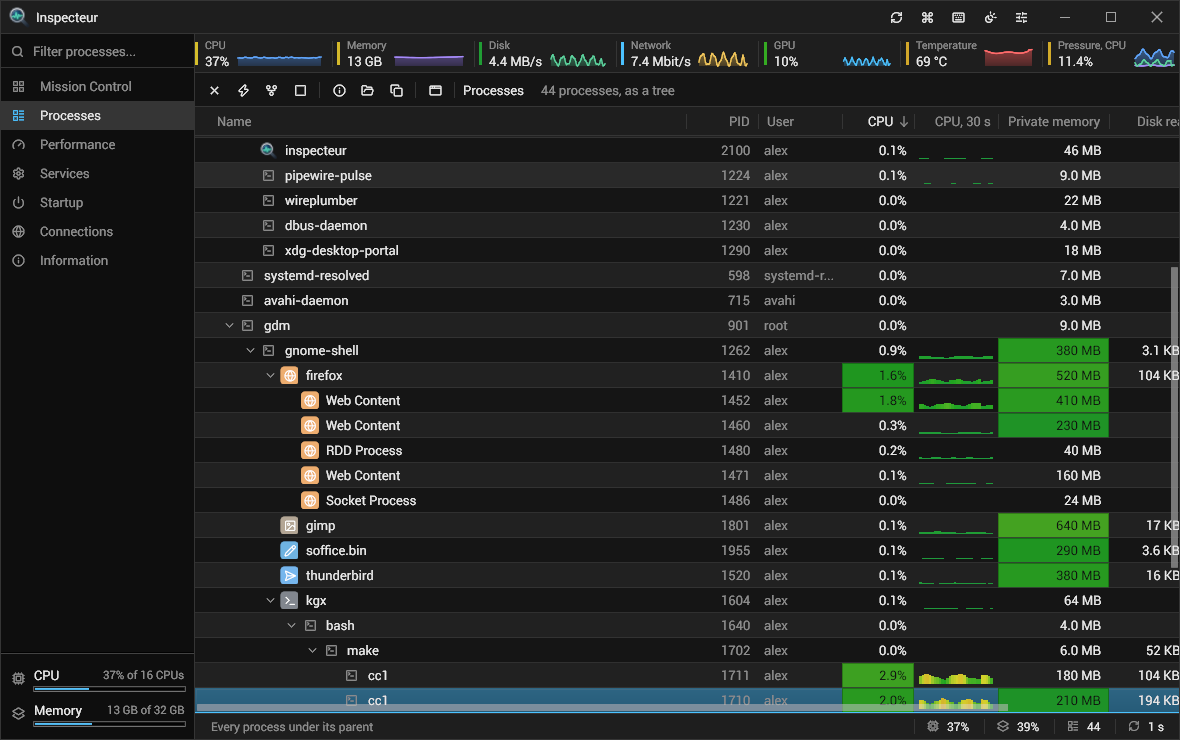
Processes, by app
Each app is one row with its icon and every process it started under it; the rest is background. Or every
process under its parent. CPU, memory, disk reads and writes, threads, and the columns you add: parent, state,
priority, start time, command line.
Act in a key
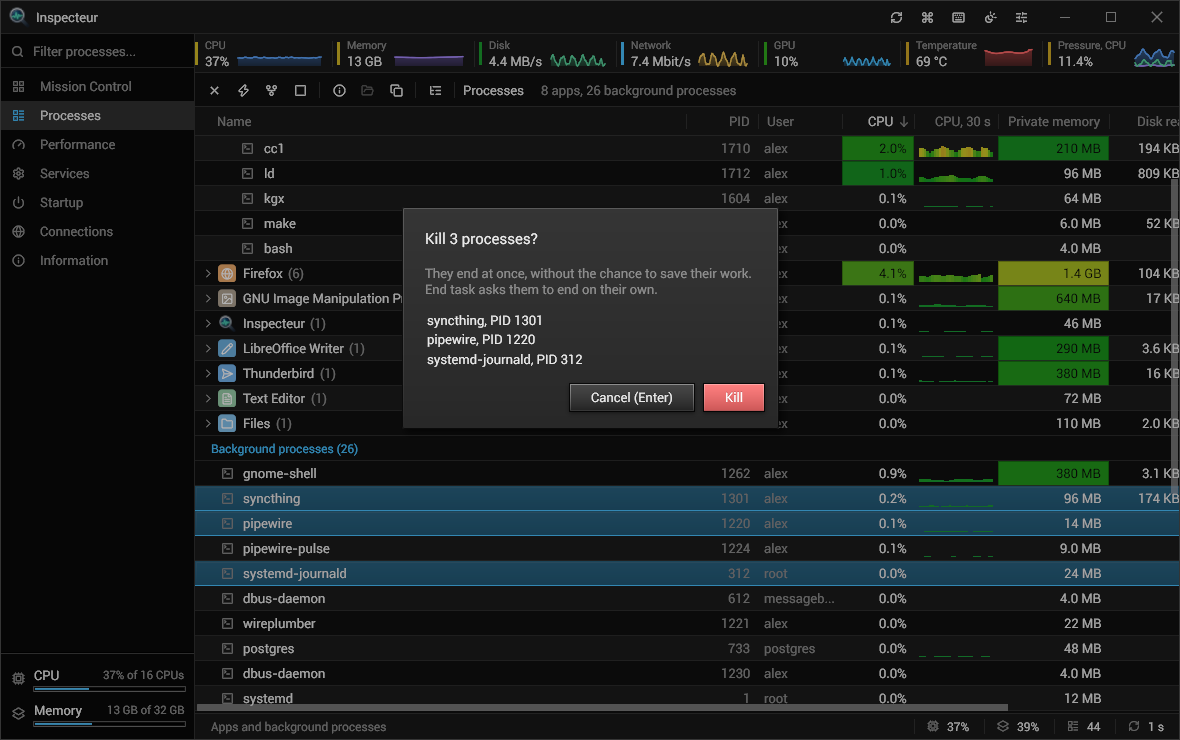
Delete ends a task, Shift+Delete kills it, Ctrl+Delete ends a whole tree; select many rows with Ctrl and Shift.
A kill lists each process before it acts. Before any signal the process is pinned by a pidfd and its start time
read again, so a reused PID is never hit.
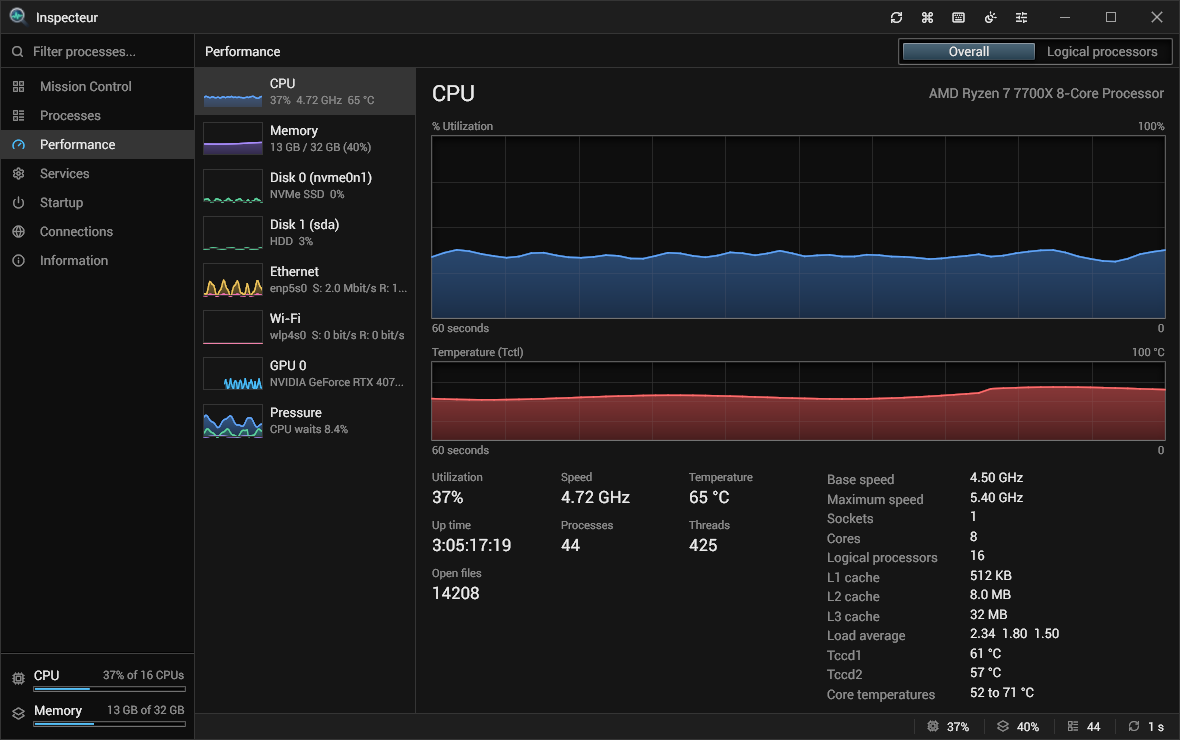
Performance, live
CPU as one graph or one per logical processor, memory and what it is made of, every disk, every network
interface and the GPU. A minute of history is kept while you look elsewhere.
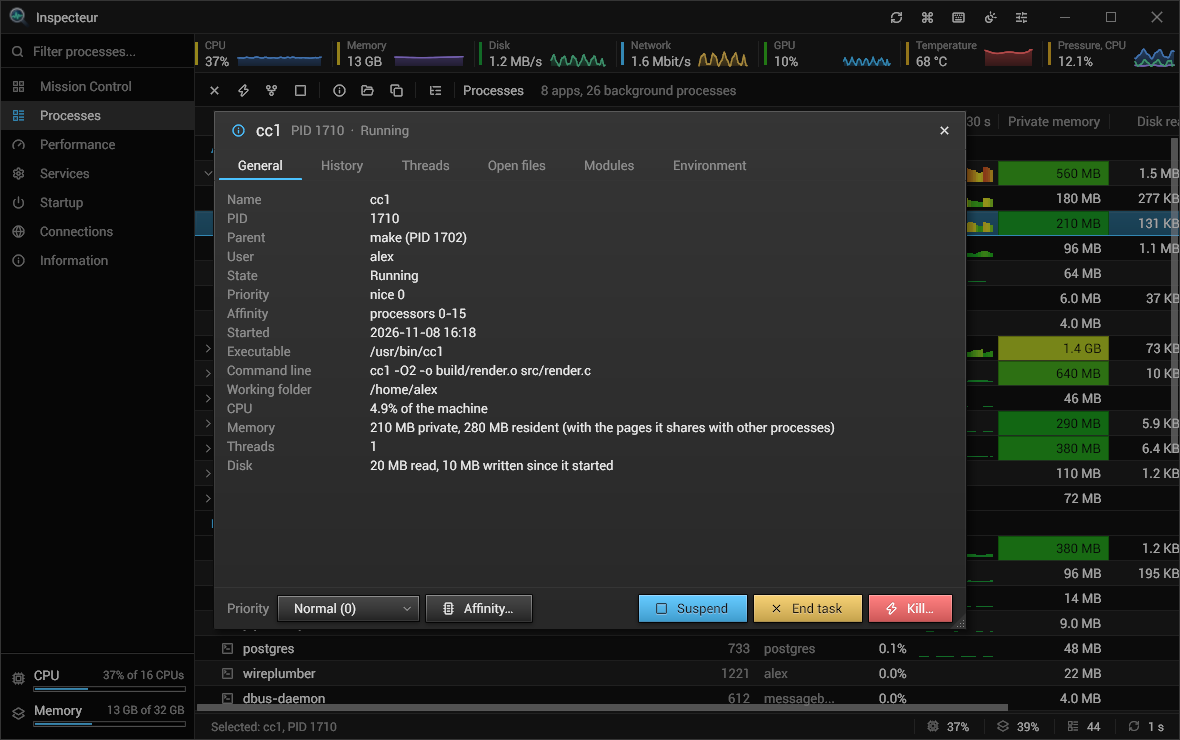
Properties of a process
Its executable, command line, folder and parent; its threads, open files, loaded libraries and environment, each
with a filter. Its priority and the processors it may run on; suspend it, resume it, write a dump.
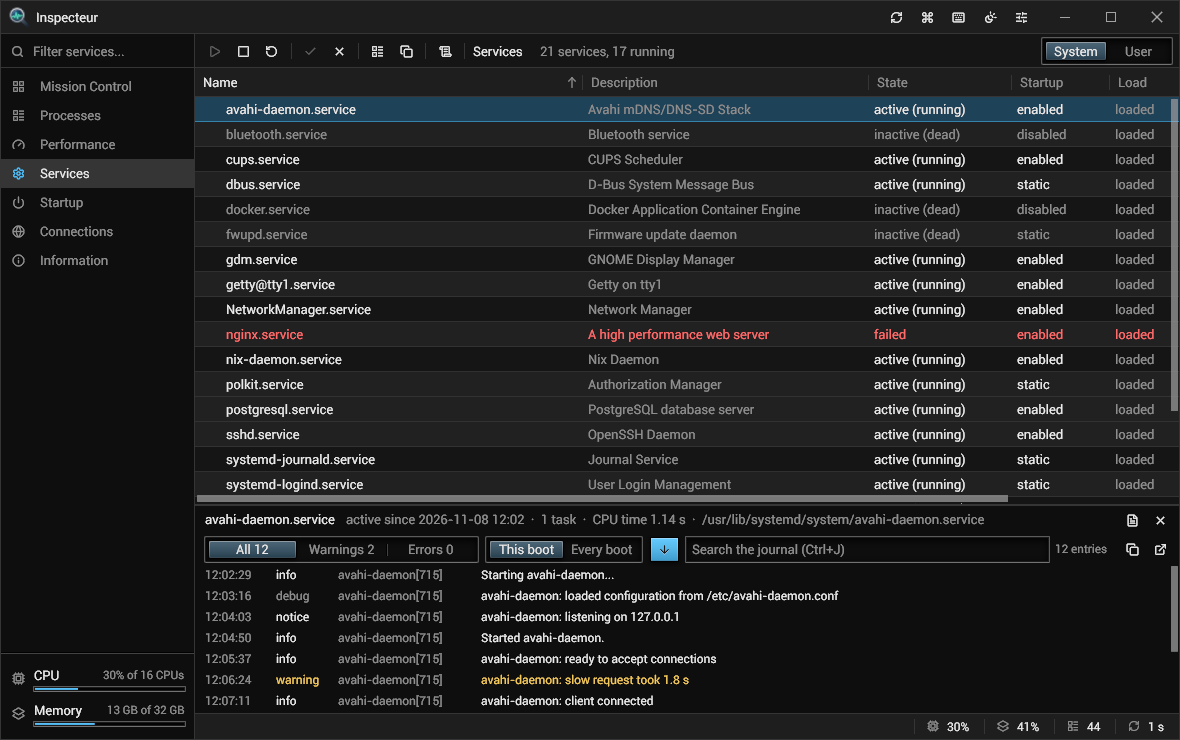
Services
systemd's system and user services, read over D-Bus: their state, whether they start at boot, their main
process and memory, and their journal: levels in colour, errors and warnings counted and filtered, followed live, searched. Start, stop, restart, enable, disable; polkit asks when it must.
Startup
What starts with your session: the autostart entries and the user services the session wants. Turn one off
the way the specification says, and on again.
Connections
Every TCP and UDP socket, IPv4 and IPv6, with the process that holds it. End that process, copy an address, jump
to its row in Processes.
Information
The system, processor, memory, GPUs, disks and file systems, network, screens and batteries on one page, and
all of it copied as plain text in one key.
Light on the machine
Drawn on the GPU by its own toolkit, no web view. On screen in about 270 ms; about 1 % of one core at rest.
A section you do not show reads nothing, and Ctrl+Space pauses it all.